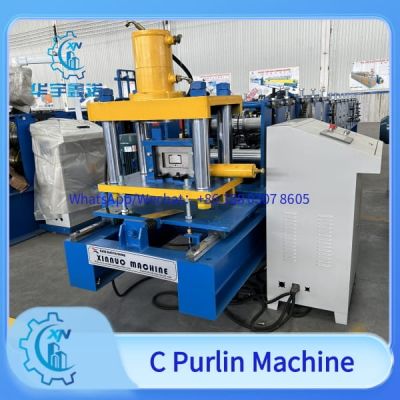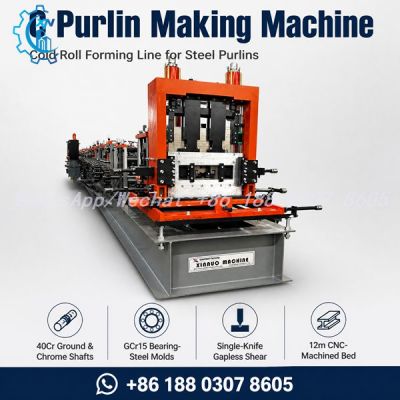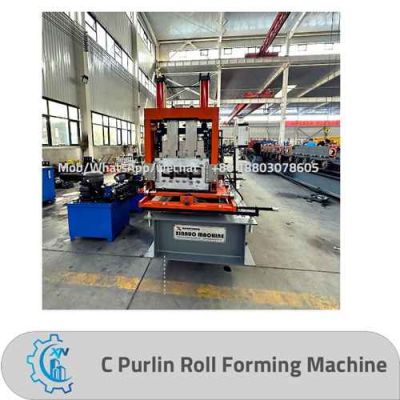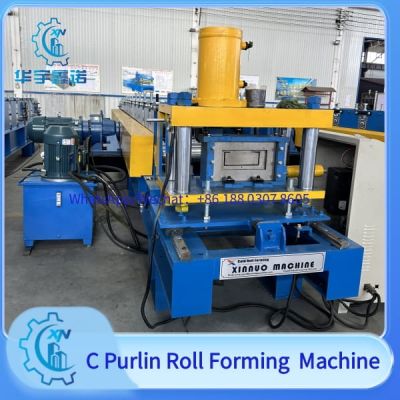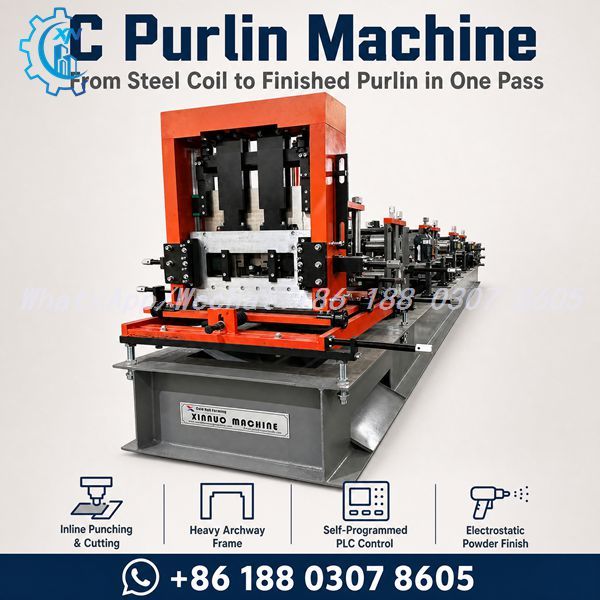
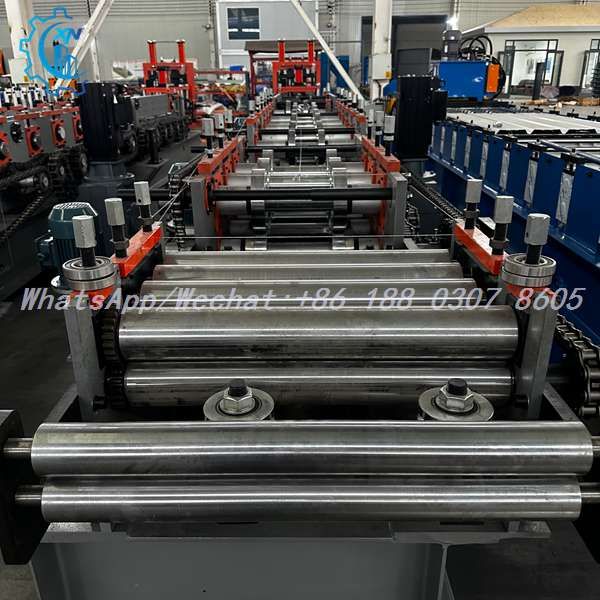
1. C channel forming machine with automatic size change - web height and flange width reset by powered adjustment, so the same line runs the full purlin range without changing rolls.
2. Machined slide-block adjustment stations with leadscrew rods and chrome guide rollers hold each stand rigidly at its new setting, which keeps the section consistent after every changeover.
3. Multi-strand roller chain transmission over large sprockets with locknut-locked adjustment screws; flat finishing and feed rolls keep the section straight and the surface unmarked.
4. Mob/WhatsApp/Wechat: +86 188 0307 8605
5. Email: sara@xinnuomachine.com
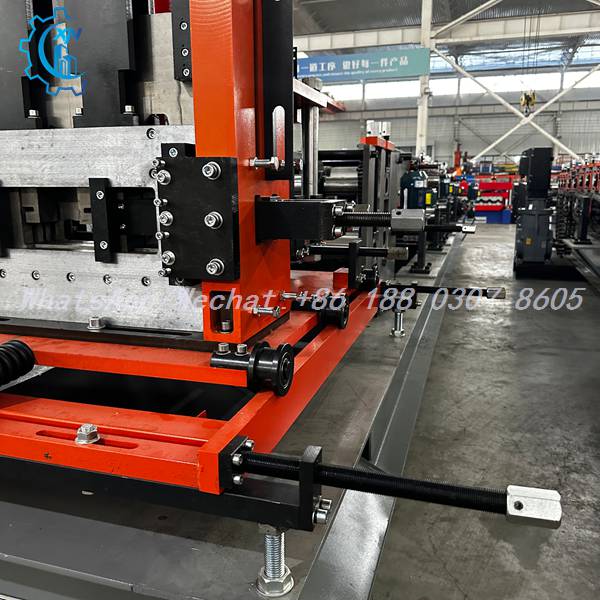
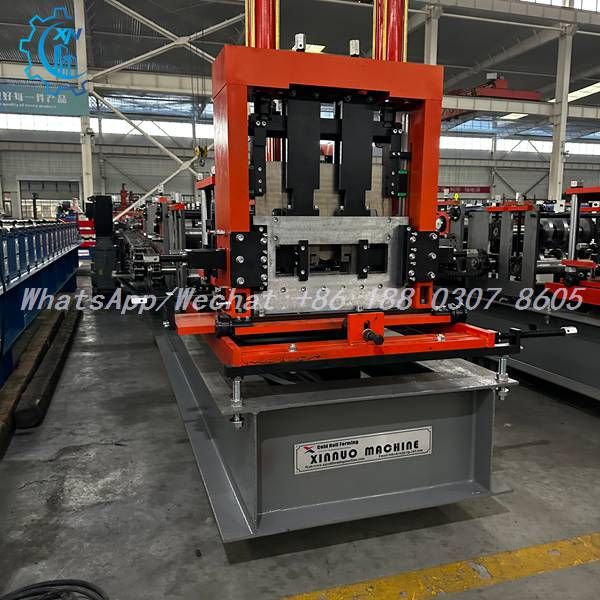
Adjustment station of the C channel forming machine: a solid black machined slide block is bolted to the orange-red stand plates with two neat rows of chrome hex bolts, and its leadscrew adjustment rod runs out to a flat machined eye end for turning, while two small guide rollers with exposed ball bearings feed the strip path from the bracket below. A threaded foot with a hex nut sets the station level on the bed.
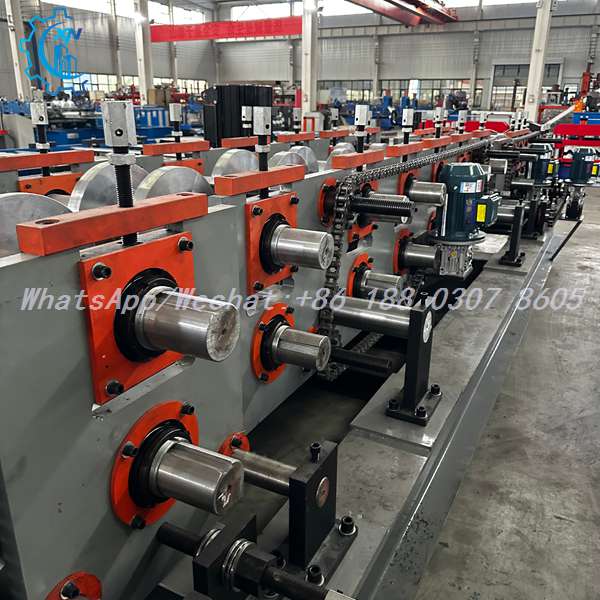
Along the C channel forming machine: the grey steel bed carries a receding row of orange-red bearing housings with black circular bearing caps and polished chrome shaft ends at three levels, large mirror-finished flat disc rolls sit at the upper left, and a rack of vertical black adjustment columns with threaded rods stands over the upper rolls beside a small blue motor mounted vertically on a bracket to drive its chain loop.
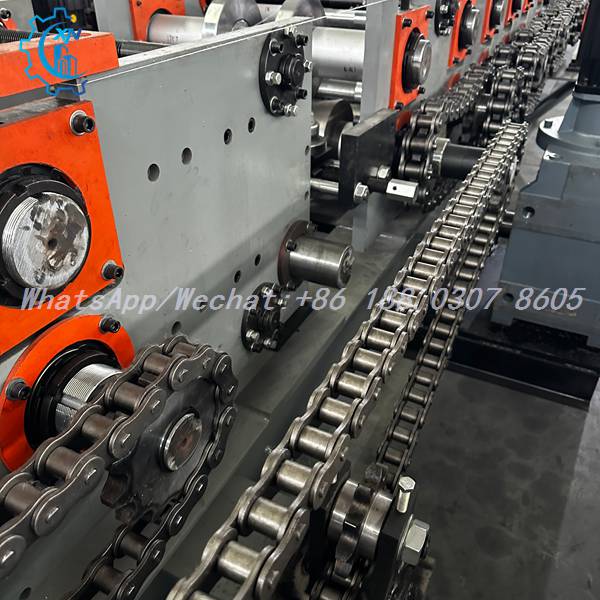
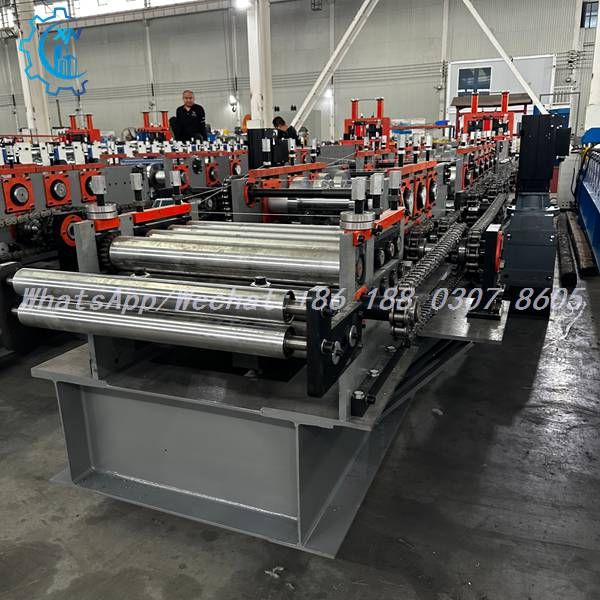
Transmission side of the C channel forming machine: three strands of heavy oiled roller chain loop over large dark sprockets, one sprocket fixed with a big chrome hex nut and washer and another passing an unkeyed idler, while the orange-red cross rail above carries two vertical threaded rods with locknuts for setting the upper rolls. Behind the chain, the grey plate frame shows its drilled and slotted mounting holes.
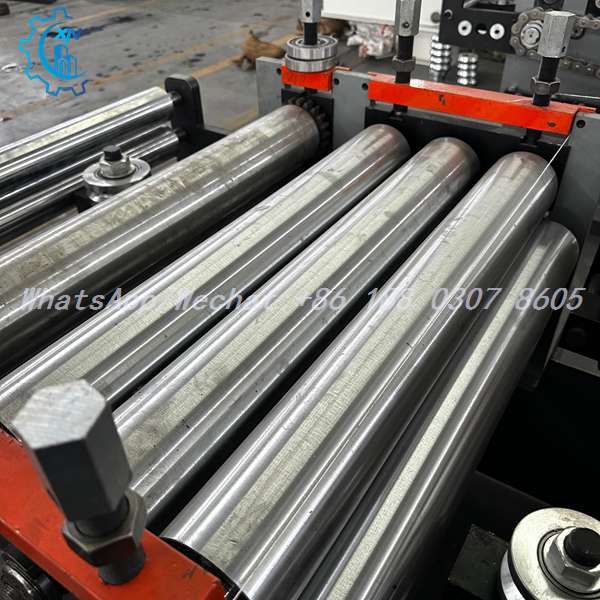
Inside the roll cluster of the C channel forming machine: four or five large mirror-finish flat rolls run parallel through the frame with no profile grooves, and a big black hexagonal adjustment head with its locking nut stands on the orange base frame for setting frame width and roll gap, above grey machine members on the shop floor. Square-headed vertical posts and a chrome shaft end frame the rolls.
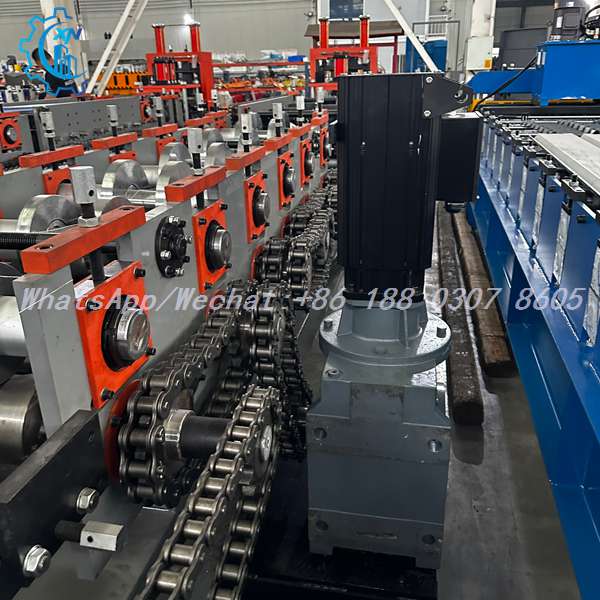
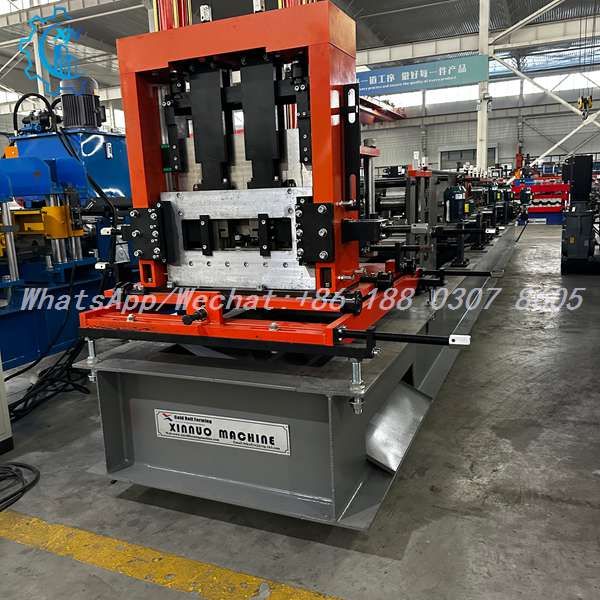
Drive side of the C channel forming machine: a tall black vertical drive and adjusting unit with a rounded top cap stands on a dark grey-green cast pedestal with a flanged disc base, while two to three rows of oiled roller chain sweep past large sprocket teeth toward the orange-red bearing plates, with a blue machine alongside. Polished chrome shaft ends and a hex adjuster sit beside the chain run.
C Channel Forming Machine - Manufactured by XINNUO Since 1995
XINNUO has manufactured cold roll forming equipment since 1995, and the C channel forming machine is one of the product families we have built longest. The stands, the adjustment mechanism, the cutting unit and the control system are all made in our own workshop, so the automatic size change function is designed into the line from the start rather than added on afterwards.
This machine suits buyers who run many purlin sizes rather than one fixed section. Each stand is set by a machined slide block bolted to the stand plates, driven by a leadscrew adjustment rod with a locking element, with chrome guide rollers keeping the strip path aligned. Because every setting is locked after adjustment, the section repeats accurately the next time you come back to that size. Web height and flange width adjust independently, so a taller purlin can be produced without disturbing the flange detail.
Drive is taken along the line by multi-strand roller chain over large sprockets, with the main gearbox floor-mounted and locked adjustment screws above the upper rolls. Flat finishing rolls follow the forming section to keep the section straight and the surface unmarked. In our fully automatic integrated configuration the line runs roughly 22.5m long by 2.1m wide and stands 2.2m high, so we confirm shop clear height of 2.5m or more and the total line length on the layout drawing before shipment. Machines are paired with a decoiler and a run-out table, and have been exported to more than 150 countries with installation, training and long-term spare parts support.
Q1: What is the difference between web height and flange width on a C purlin?
A: Web height is the depth of the section - the vertical side measured between the two flanges - while flange width is the horizontal leg that carries the fixing. Web height sets the spanning strength of the purlin; flange width sets how it connects. A C channel forming machine that adjusts both independently covers far more of your order book than one fixed section.
Q2: How is each forming stand set and locked at a new size?
A: The roll position is carried on a machined slide block bolted to the stand, moved by a leadscrew adjustment rod, and locked once set. Guide rollers keep the strip path aligned as the stand moves. Because the block is machined from solid and shimmed against the stand rather than shimmed with loose plates, the setting holds under load and repeats when you return to that size.
Q3: Why does the line use multi-strand chain drive instead of a single chain?
A: Torque has to reach many stands, and a single chain would have to be very large to carry it. Splitting the load across several strands over large sprockets keeps the drive compact, keeps chain tension per strand lower so wear is slower, and lets one section of the drive be serviced without dismantling the whole transmission.
Q4: What role do the flat rolls play in a C channel line?
A: The profiled rolls form the web, flanges and lips; the large flat rolls come after them to flatten and straighten the running length. They remove the slight bow and twist left by forming, so the purlin sits flat on the frame during erection. Because they are flat and mirror finished, they also polish rather than mark pre-painted strip.
Q5: How is section consistency maintained after repeated size changes?
A: Three things: locked adjustment at every stand so settings cannot drift, a rigid welded frame that does not flex when roll pressure rises, and guide rollers that keep strip centred through the change. In practice the first length after a changeover is checked against the drawing, and if it gauges correctly the rest of the run follows.
Q6: Can it run galvanised and pre-painted strip without surface marking?
A: Yes. Roll surfaces are polished, and the adjustment range lets roll pressure be set to suit coated material. For pre-painted strip we reduce contact pressure and check the feed and flat-roll sections, because those are where coating damage usually starts. Tell us your coating type and we will set the line up accordingly.
Q7: What shop space and foundation does the machine need?
A: In the fully automatic integrated configuration the line is about 22.5m long and 2.1m wide with a machine height around 2.2m, so a clear height of 2.5m or more is recommended. It stands on a level concrete floor with anchor points; a foundation block is used where coil weight and line length require it. We supply the layout drawing with the decoiler position and service clearances before shipment.
Q8: What is included with delivery, and how is commissioning handled?
A: The machine is assembled and test run on your profiles before shipment, then packed with electrics and hydraulics protected for sea freight; delivery is typically 30 to 45 days depending on configuration. We supply the layout drawing, section drawings, manual and spare parts list, and provide installation and commissioning guidance, with engineers available on site on request.
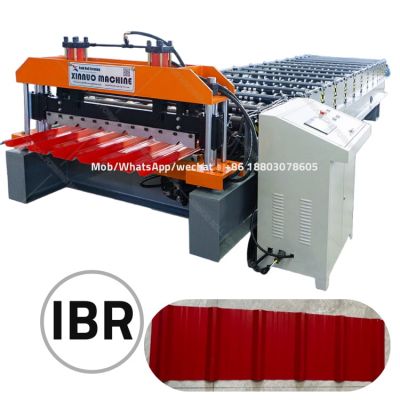
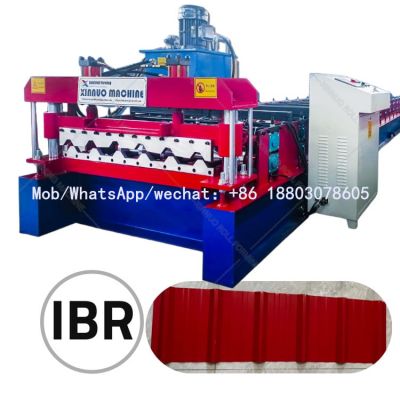
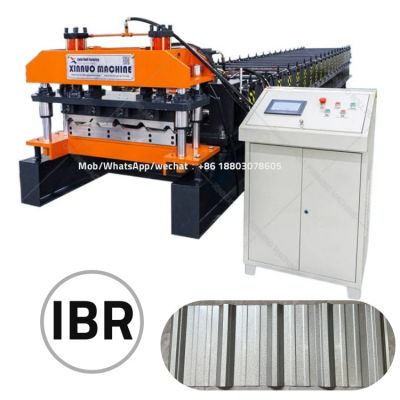
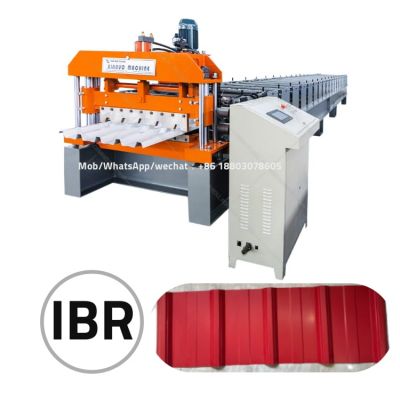
XINNUO ROLL FORMING MACHINE CO., LTD is a professional manufacturer specializing in high-quality ibr making machine and advanced ibr machine solutions. With years of industry experience, we provide reliable, efficient, and customized roll forming equipment to meet global roofing production needs, ensuring stable performance, precision forming, and long-term durability for our customers worldwide.
[ read more ]