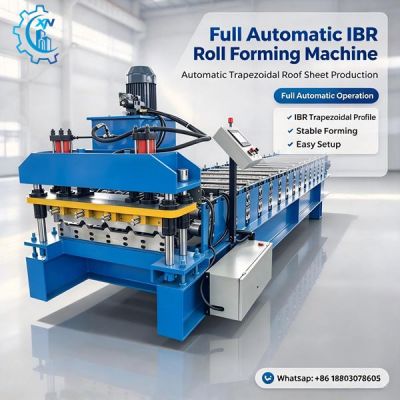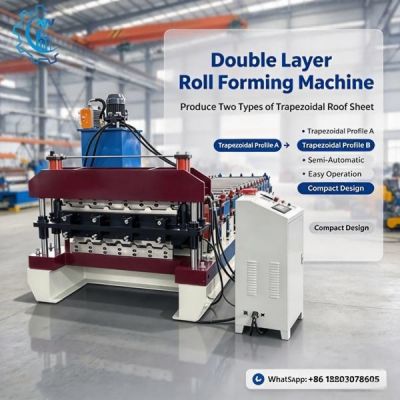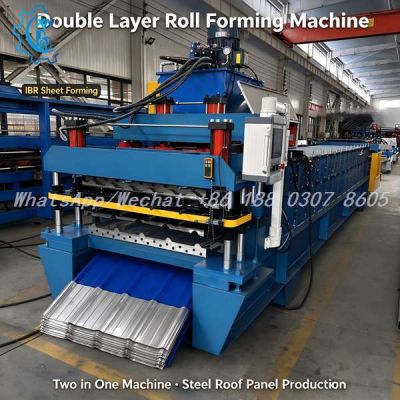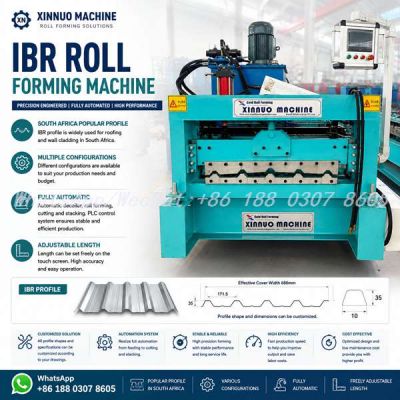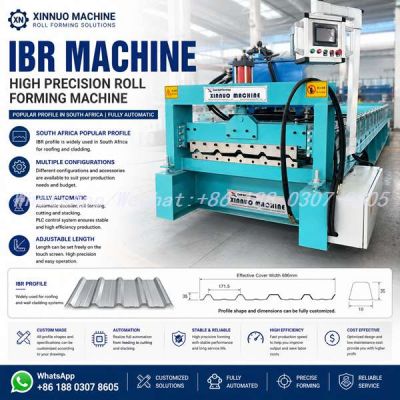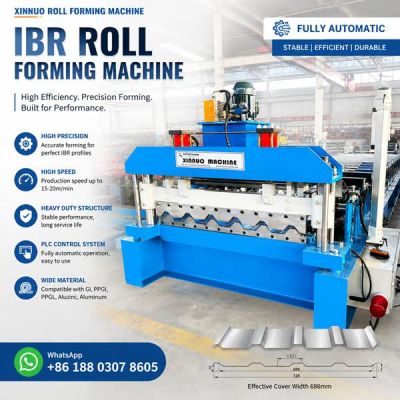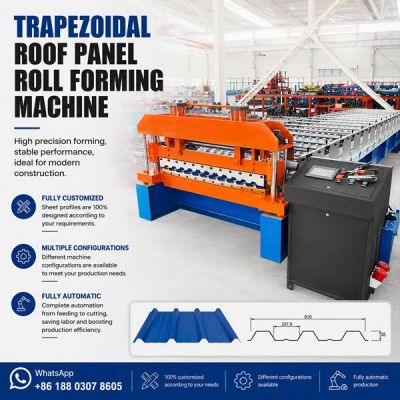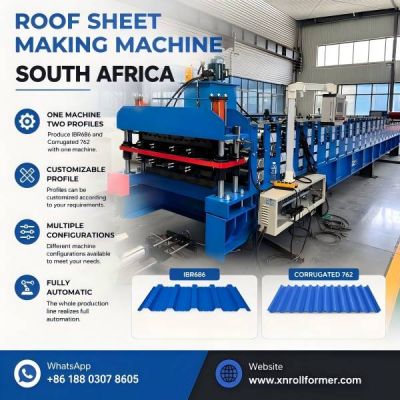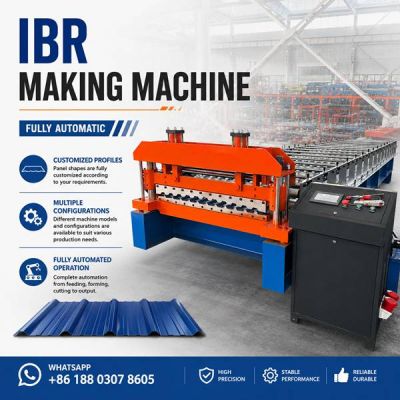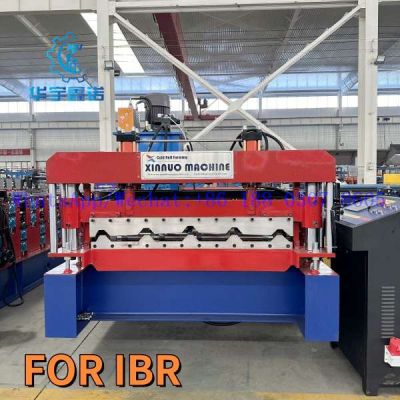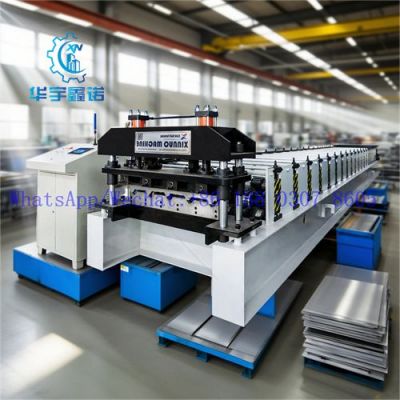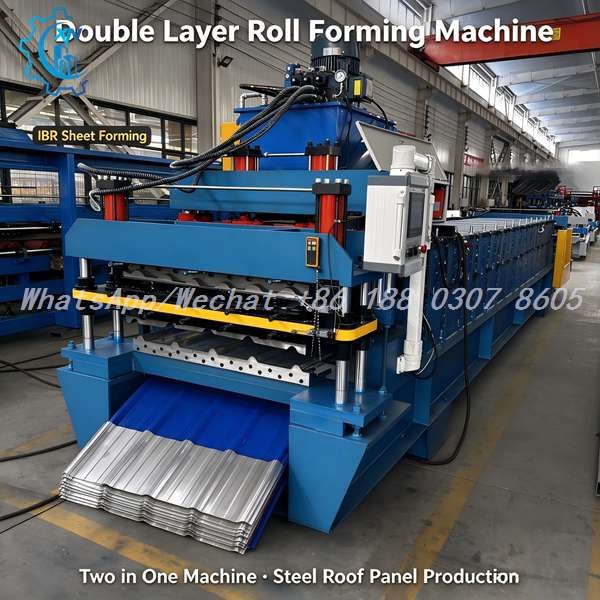
1. Double layer IBR machine - IBR 686 roof sheeting forms on one layer and a Q-Tile glazed tile profile on the other, so two roof profiles come off a single machine footprint.
2. Handwheel roller-gap adjustment on every forming station, flanged motor on a cast gearbox drive, and a hydraulic shear with dies machined to match the rib pattern.
3. Built for Chromadek, Zincalume, galvanised and PPGI coils at 380V/50Hz, with a hydraulic power pack, sight-glass oil check and rating-marked lifting shackles for container loading.
4. Mob/WhatsApp/Wechat: +86 188 0307 8605
5. Email: sara@xinnuomachine.com
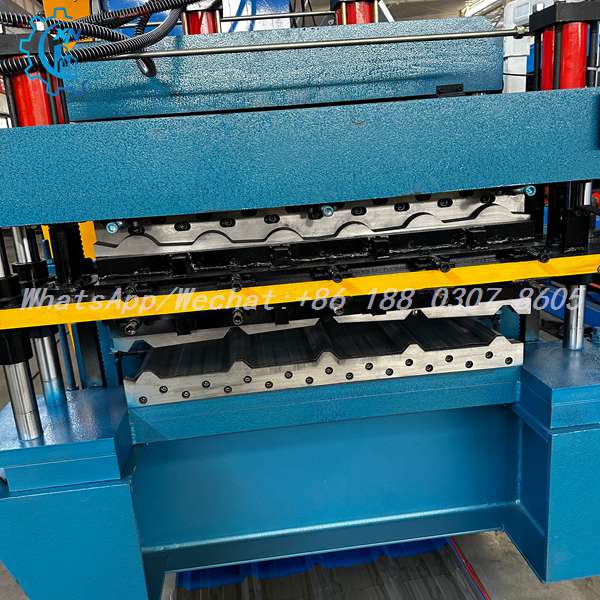
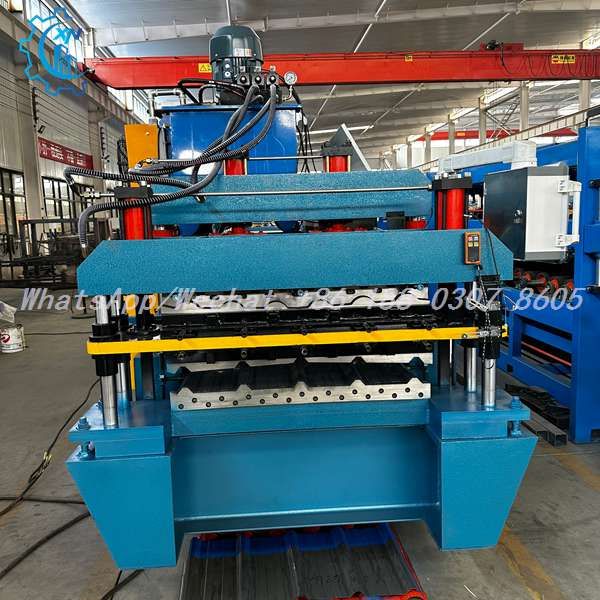
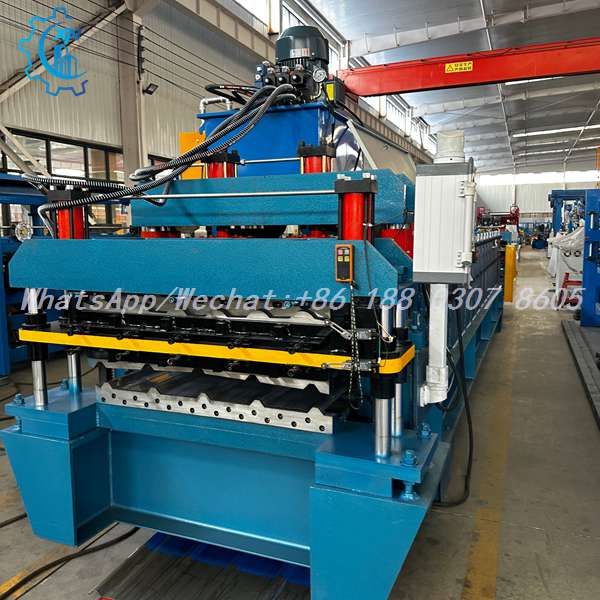
The cut-off station of the IBR machine, seen from the operator side: the teal speckled frame carries machined steel dies whose notched edges follow the rib pattern, with rows of dark bolts holding the blade holder above them. A yellow safety bar crosses the mouth of the shear, red hydraulic cylinders stand to the right, and black hoses loop overhead. Chrome guide columns keep the blade travel straight during the cut.
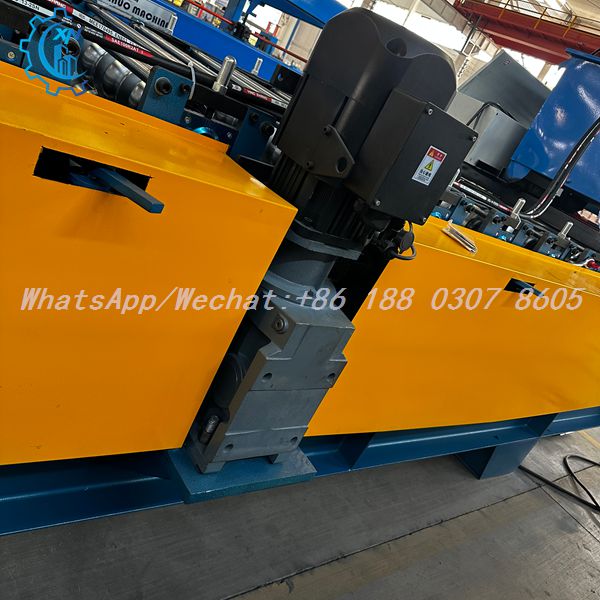
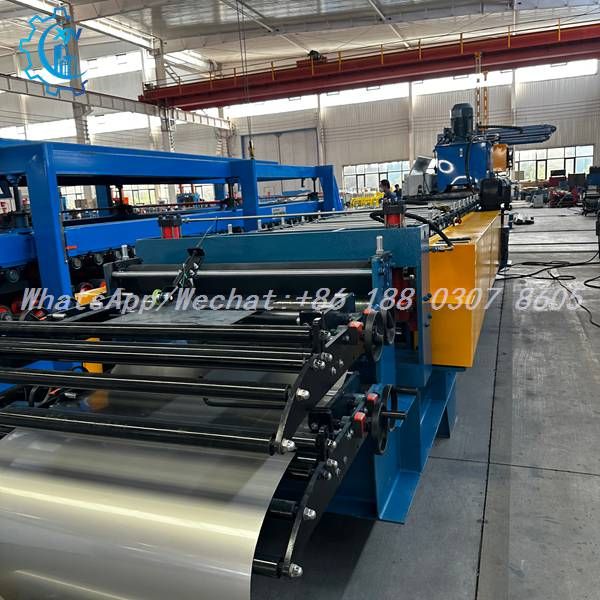
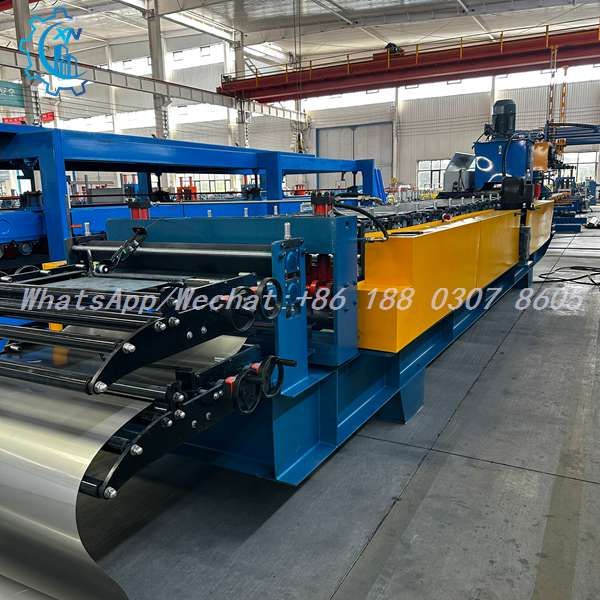
Drive end of the IBR machine: a dark electric motor with its terminal box and a red warning label is flange-mounted on a cast gearbox, and both sit behind the yellow guards, which carry flat handles so they can be lifted clear during maintenance. The guards run along the blue machine base, over the bed that carries the forming stations and the sheet path. The gearbox output drives the forming shafts down the line.
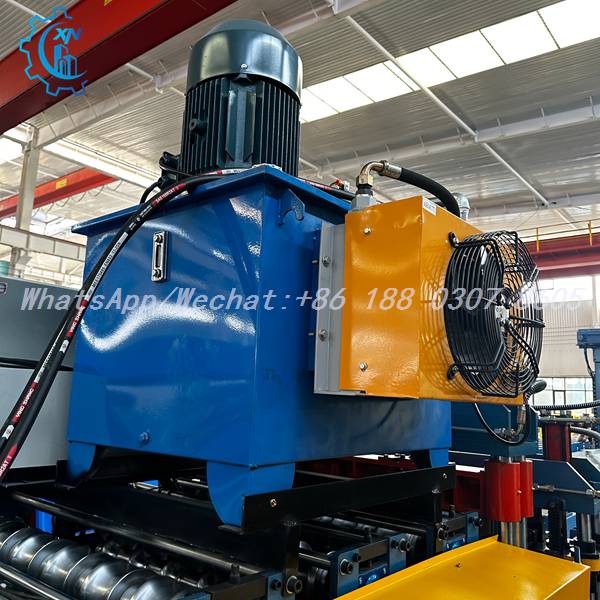
Hydraulic power pack of the IBR machine, mounted above the forming bed: the blue reservoir carries a vertical sight glass for checking the oil level, a finned motor with its cooling shroud sits on the tank top, and an orange cooler box with an axial fan and wire guard is bolted to the side. Black hoses drop away below, past a red cylinder. The sight glass is the first check before a shift starts.
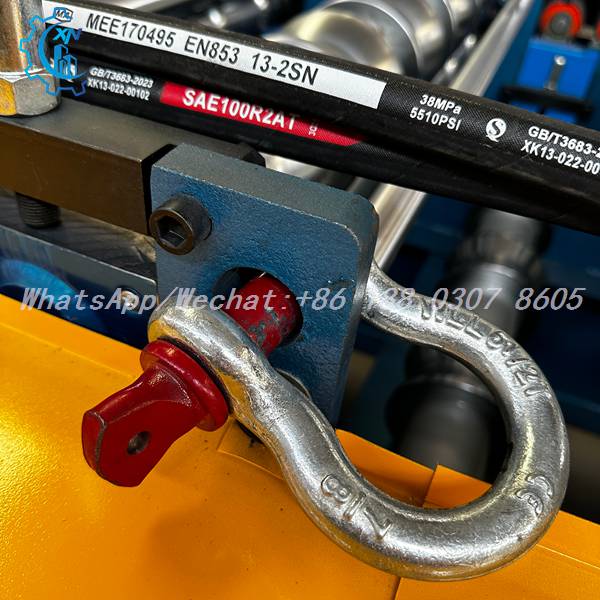
Transport detail on the IBR machine: a galvanised shackle with a red steel pin is bolted through a bracket on the frame, giving a rated lifting and lashing point when the modules are craned into a container. Above it runs a black high-pressure hose printed with its specification, EN853 13-2SN and SAE100R2A1, rated 38 MPa or 5510 PSI. The shackle is used again when the line is offloaded on site.
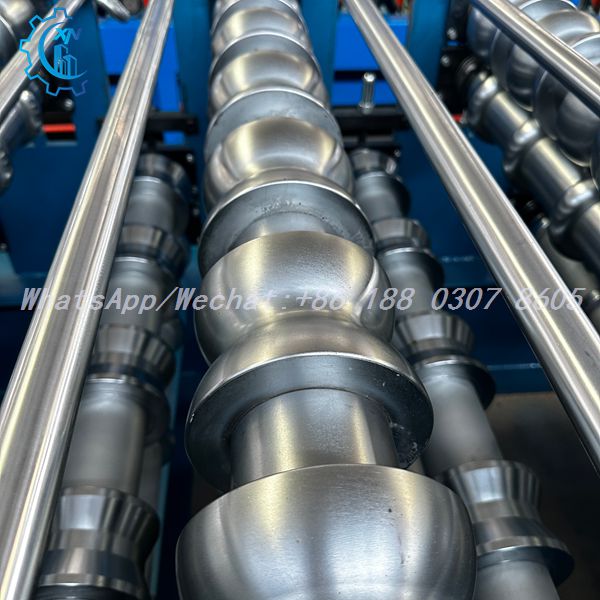
Looking straight along the forming station of the IBR machine, the roller train fills the frame: polished rollers with bulging pillow-shaped crowns sit on their shafts in graduated diameters, and a second tier of similar rollers runs behind them, which is how a double layer body carries two profiles. Two long polished guide rails flank the pass, above the blue welded frame that carries the shaft bearings. The paint and rollers are still clean from the works.
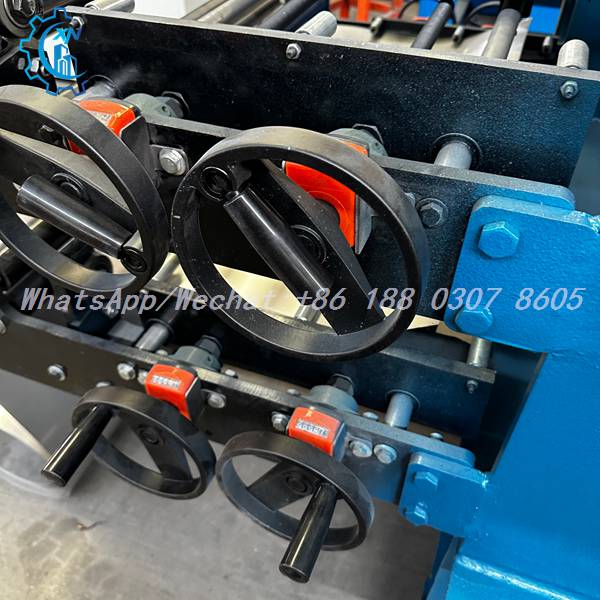
Set-up side of the IBR machine: four black handwheels with red grips sit on threaded adjustment blocks bolted to a heavy cross member of the frame. Each wheel drives the screw that positions a roller shaft, so the gap between upper and lower rollers can be set by hand when a different coil thickness or profile is run, with plated nuts and hex bolts around the assembly. The setting is done at standstill before a new coil is threaded.
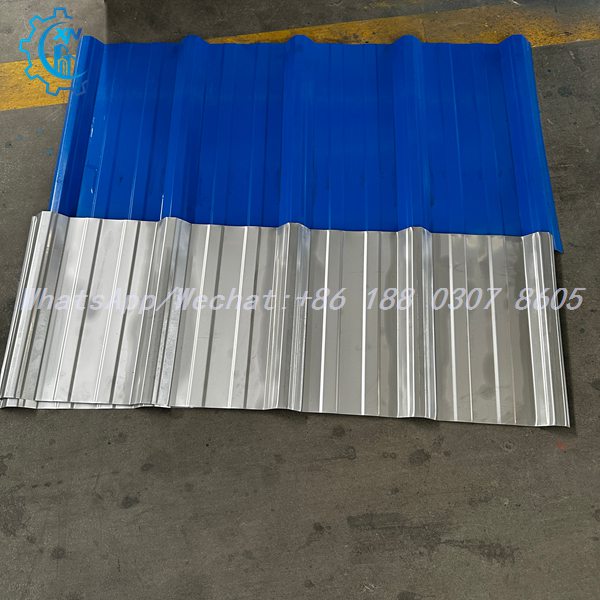
Two finished sheets rest on the workshop floor in front of the IBR machine: the upper one is a blue pre-painted sheet with deep trapezoidal IBR ribs, and below it lies a galvanised sheet with a finer rib pattern and a bright spangled finish. Both show the crisp, evenly spaced ribs the line produces, laid out beside the yellow safety line painted on the concrete. Panels are checked on the floor before dispatch.
IBR Machine - Made in the XINNUO Works Since 1995
XINNUO designs and builds IBR machines and complete metal forming lines, and has done so since 1995. Our works in China handles the profile design, frame fabrication, roller turning, hydraulic assembly and electrical wiring under one roof, so the forming rollers, shear dies, gearbox, hydraulic power pack and control panel of your IBR machine are matched to each other before the line is assembled rather than gathered from separate suppliers.
This double layer IBR machine is built for buyers who need two roof profiles but have one machine bay: IBR 686 (Inverted Box Rib) roof sheeting on one layer, and a Q-Tile - the glazed tile look profile used across South Africa and the wider Southern African market - on the other. The second layer can also be configured as a glazed tile roll forming machine profile of your choice, drawn from your own sample or drawing.
Every line is run on the customer's profile before dispatch, and the cut is checked on the customer's own coil. We then protect the rollers, pack the modules for container loading and supply the profile plan, layout drawing, test report, setting sheet, operator training and spares support. Machines have been supplied to customers in more than 150 countries, including South Africa, Zimbabwe, Zambia and the wider SADC region.
Q1: How does a double layer IBR machine actually work?
A: Two sets of forming rollers are stacked one above the other in the same machine body, and both are driven from the same drive. The material path is switched at the entry guides, so the coil is fed either into the upper set (IBR 686) or the lower set (the Q-Tile profile). Only one layer runs at a time.
Q2: Which two profiles can the layers run?
A: In this configuration, IBR 686 (Inverted Box Rib) roof sheeting on one layer and a Q-Tile glazed tile profile on the other. The tile layer is built as a glazed tile roll forming machine profile to your own drawing or sample, so cover width and rib pitch are set for your market rather than taken from a catalogue.
Q3: Can the machine run IBR and Q-Tile at the same time?
A: No. A double layer machine runs one profile at a time, because the two roller tiers share one drive and one bed. If you need both profiles running simultaneously - for example, one line on IBR while another on tile - two separate machines suit that production plan better, and we will say so rather than oversell a two-in-one.
Q4: How long does it take to switch from IBR to Q-Tile?
A: Typically 5-15 minutes to move the material path over and check the entry guides, depending on the configuration. After a coil change, the handwheel gap setting on the stations is checked against the setting sheet, and the first sheet is measured before the run continues. The exact sequence is recorded for your machine at commissioning.
Q5: How much floor space does a double layer machine save?
A: A double layer build typically occupies around 20-35 m² against roughly 44-88 m² for two equivalent single layer lines - a saving in the region of 40-60%, because the two roller tiers share one base and one bed. The figure depends on the profiles, the decoiler and the run-out arrangement, so it is confirmed from your layout drawing.
Q6: What frame and drive does a double layer build need?
A: The frame is normally one grade heavier than the equivalent single layer machine, because the two tiers add weight and vibration. The drive is sized on the layer with the higher torque demand, and the chain is chosen on that basis. This is why we ask for both profile drawings before quoting, not just one.
Q7: How is the line loaded and offloaded safely?
A: The frame carries rating-marked lifting shackles, and the hydraulic hoses are supplied to specification (EN853 13-2SN, SAE100R2A1, rated 38 MPa), so the modules can be craned and lashed without stressing the machine. The line is split into modules to suit a 40ft container, and we supply a loading plan showing the lifting points, packing order and the sequence for reassembly on site.
Q8: What does commissioning and operator training involve?
A: We align the modules to the layout drawing, connect power and hydraulics, fill and bleed the circuit, run the line empty, then run your first coil. Setting the two layers takes longer than a single layer machine - typically 2-3 days on site for a standard double layer build, and 3-5 days where a tile layer is involved - and we hand over the setting sheet and train your operator on both profiles during that time.
XINNUO ROLL FORMING MACHINE CO., LTD is a professional manufacturer specializing in high-quality ibr making machine and advanced ibr machine solutions. With years of industry experience, we provide reliable, efficient, and customized roll forming equipment to meet global roofing production needs, ensuring stable performance, precision forming, and long-term durability for our customers worldwide.
[ read more ]