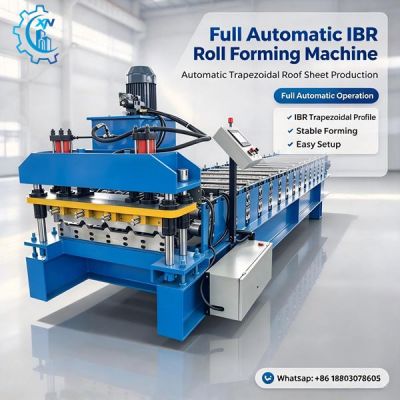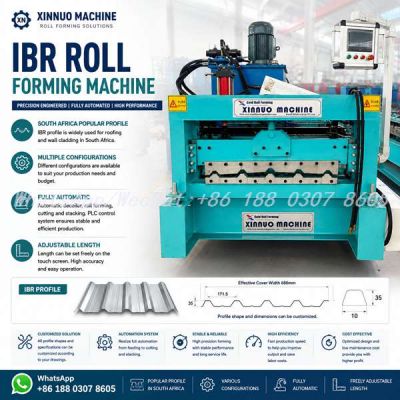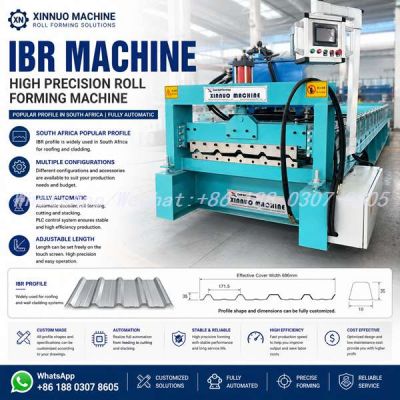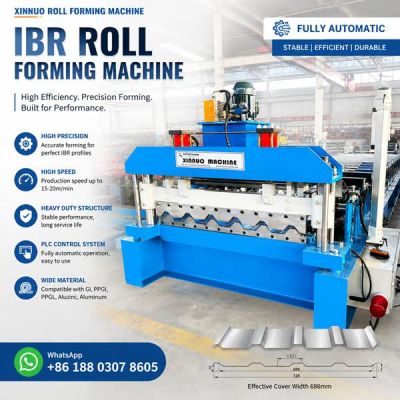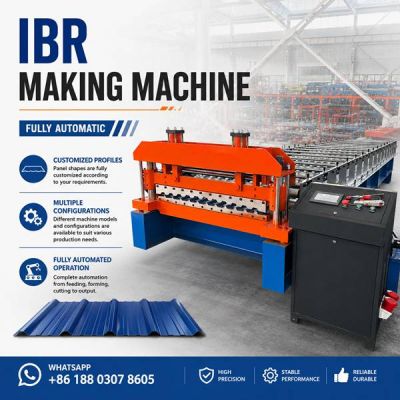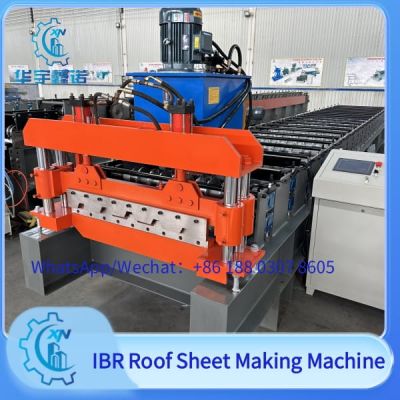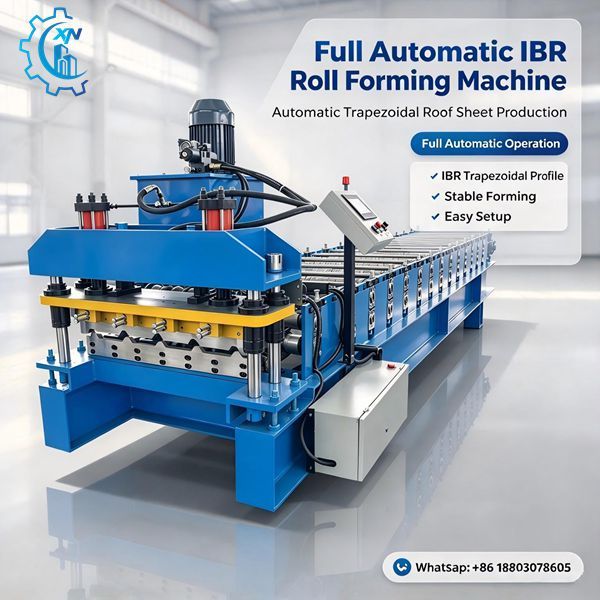
1. Single layer IBR machine for one profile: IBR 686 (Inverted Box Rib) roof sheeting is formed in stages and cut to length on the same bed, at 686 mm effective cover.
2. Operator side build: the control panel with its screen and emergency stop stands on a post beside the cut-off, with a separate push-button station on the frame, so the shear is worked from where you can watch it.
3. Adjustment at every station: each forming station carries its own silver adjustment plate with a large hex nut on the blue side panel, and the shafts are driven by roller chain along the bed.
4. Mob/WhatsApp/Wechat: +86 188 0307 8605
5. Email: sara@xinnuomachine.com
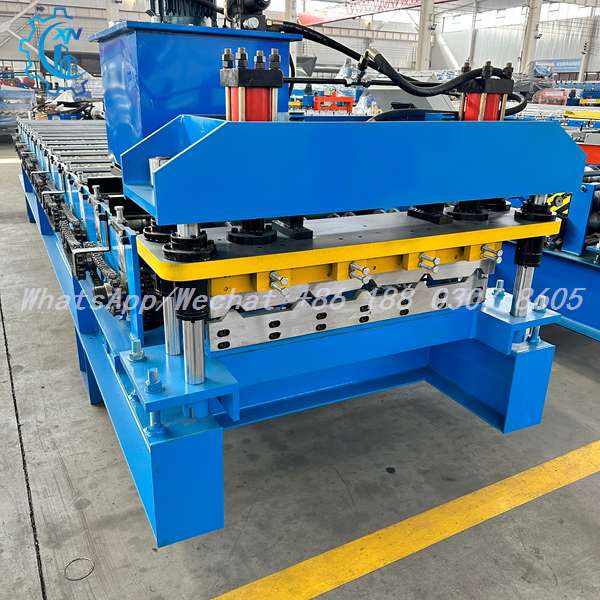
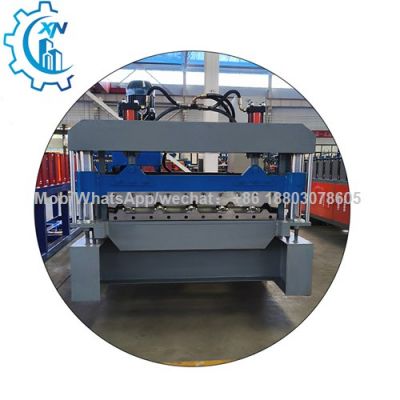
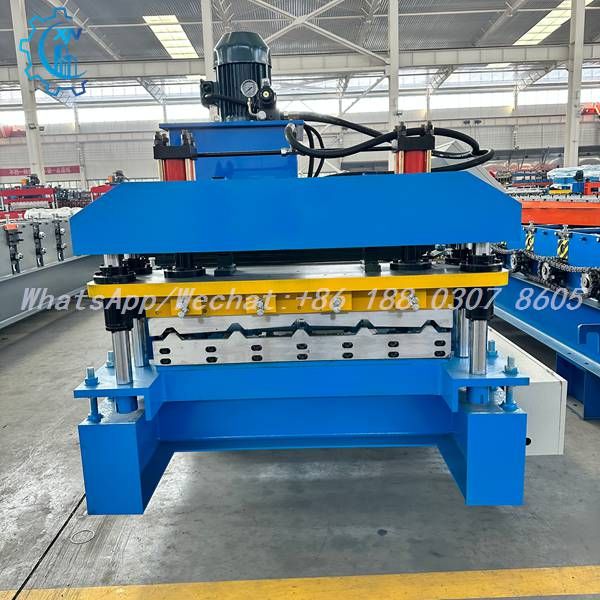
Front view of the cut-off of the IBR machine: the upper and lower die plates are drilled in a regular pattern of round holes and bolted through a black blade holder, with a yellow safety bar running across the mouth of the shear. Two red hydraulic cylinders sit on the blue housing above, and the chain drive continues along the bed to the left. The die plates are held down by rows of dark bolts.
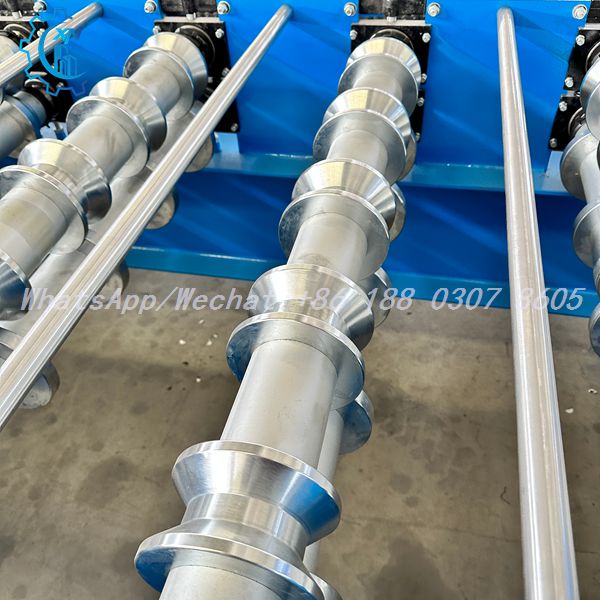
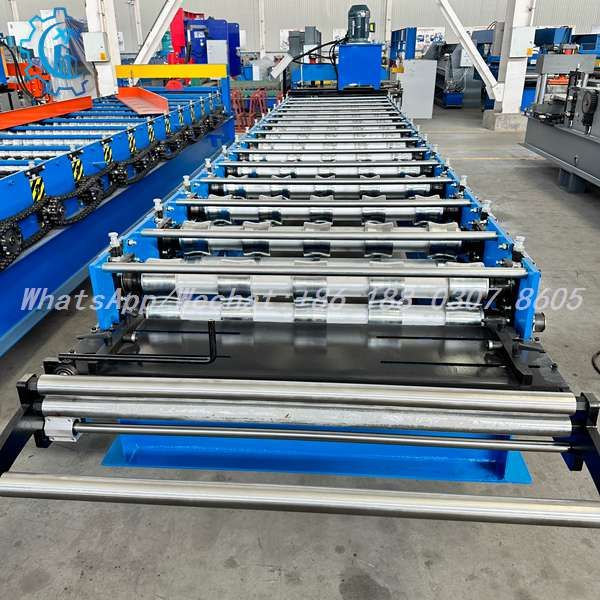
Looking down into the pass of the IBR machine: spool-shaped polished rollers are stacked along each shaft, their stepped crowns sized to fold the coil in stages, and a second shaft of similar rollers runs behind. Two long polished guide rails run the length of the frame on either side of the pass, above the blue side panels of the bed. The rollers run bright against the blue frame, with the shaft journals visible between them.
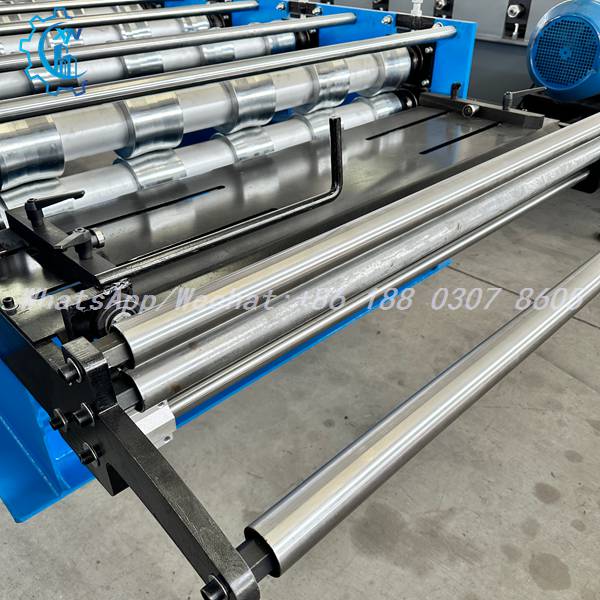
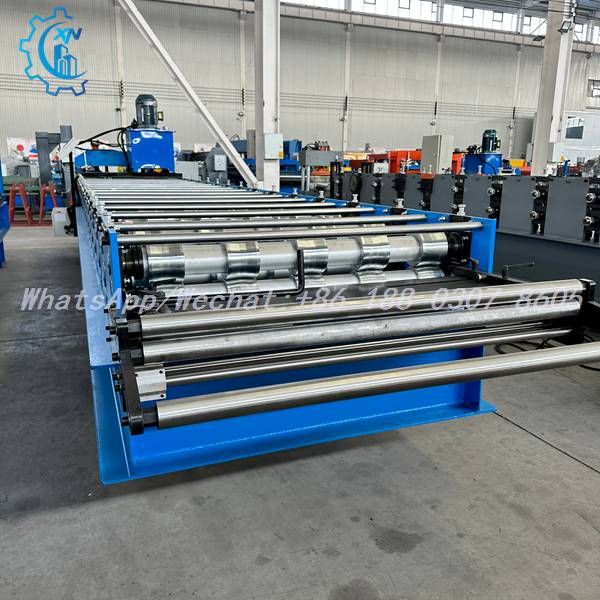
The delivery end of the IBR machine: flanged polished rollers in the last forming station pass the sheet into a run-out of long polished rollers that carry it clear of the line. A blue electric motor with its fan cowl is bolted to the frame at the right, a black bent lever stands beside the rollers, and black brackets carry the shafts. The roller shafts are carried in black brackets bolted along the delivery frame.
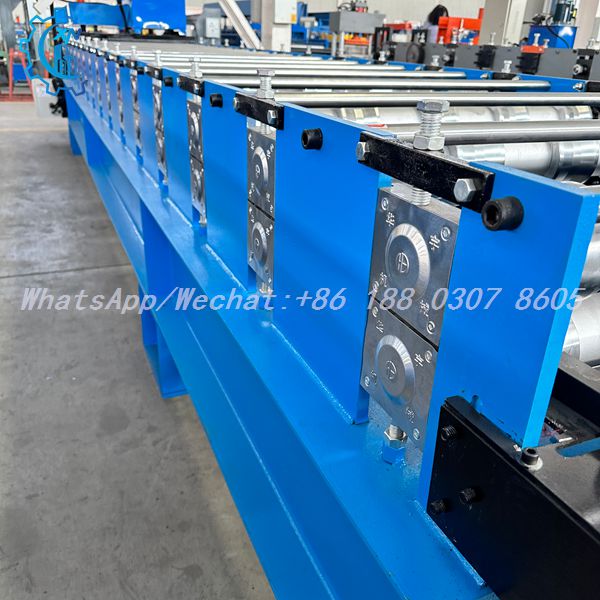
Side of the IBR machine, close up: each forming station carries a silver adjustment plate bolted to the blue side panel, with a large hex nut and a round cap for setting that station. Shafts, plates and bolt heads run away along the line above the black bed, showing the repeating adjustment points an operator works with when a profile is set. The plates are bolted straight through the blue side panel of the frame.
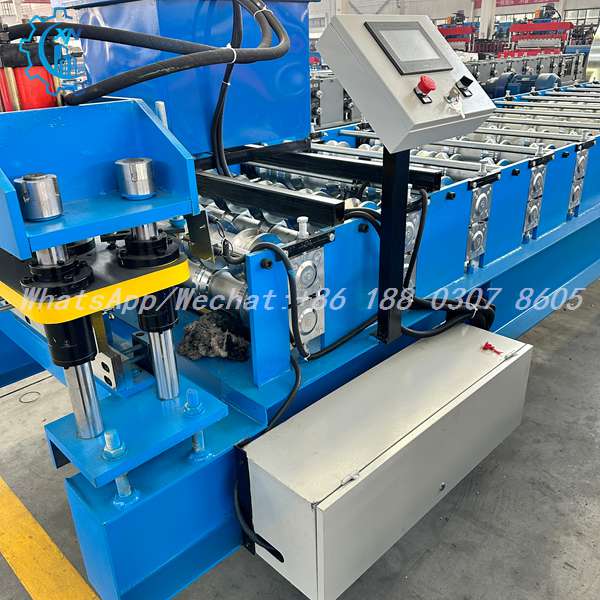
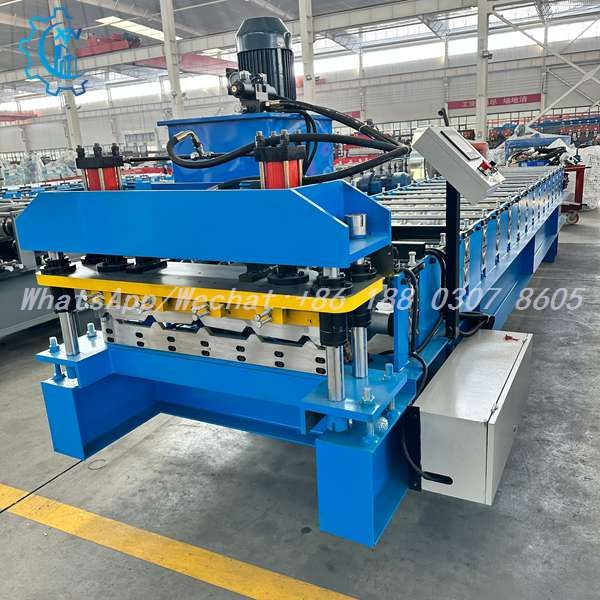
The control side of the IBR machine: an angled silver panel carrying the screen and a red emergency stop sits on a black post beside the cut-off, so the operator faces the shear while working. A separate button station with a row of push buttons is mounted on the machine frame just below it. Chrome guide columns, a yellow band and the blue frame show in the foreground. The panel sits at working height, clear of the sheet path.
IBR Machine - Made in the XINNUO Works Since 1995
XINNUO has been building IBR machines and cold roll forming lines in its own works since 1995. Profile design, frame fabrication, roller turning, hydraulic assembly and electrical wiring are all done in house, so the rollers, the shear dies, the hydraulic circuit and the control panel of your IBR machine are matched to one another before the line is built up, instead of being assembled from parts bought in from several suppliers.
This single layer IBR machine is meant for the producer who runs one profile and wants that one profile done properly: IBR 686 (Inverted Box Rib) roof sheeting, formed in stages through a single roller tier and cut to length on the same bed. There is one tier to set, one profile to hold and one control point for the operator, standing at the panel beside the cut-off where the shear can be watched while it works. Stations are adjusted one at a time from their own plates on the side of the frame, which keeps setting up straightforward for a small crew.
Every line is run on the customer's own profile and coil before dispatch, the rollers are protected for the sea freight, and the machine is packed into a 40ft container in modules. The supply includes the profile plan, layout drawing, test report, setting sheet, operating and maintenance manual, spares list and operator training at commissioning. IBR machines from these works are running in more than 150 countries, including South Africa, Zimbabwe and Zambia.
Q1: Why choose a single layer IBR machine rather than a double layer one?
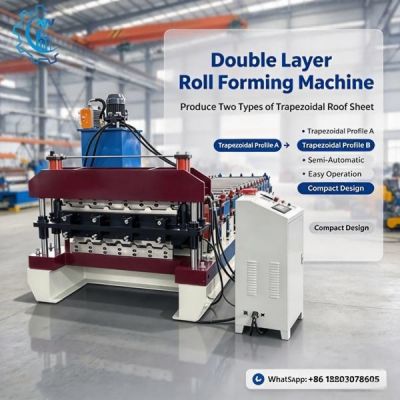
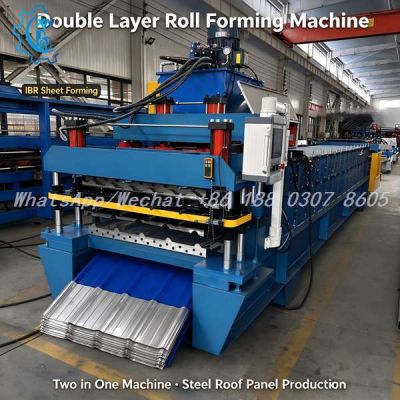
A: Because you run one profile. A single layer IBR machine has one roller tier, one drive and one bed, so there is one profile to hold, one set of stations to adjust and one control point to learn - the simplest form of the machine to run with a small crew. If you already sell two sheet profiles and need both off one bay, a double layer machine suits that better. A second tier cannot be added to this machine later, because the frame and bed are built for one tier, so tell us at the enquiry stage if a second profile is coming.
Q2: Where does the operator work the machine, and what is on the panel?
A: At the cut-off end. The control panel stands on a post beside the shear at working height, clear of the sheet path, with the screen on its face and a red emergency stop beside it. A separate button station with its own row of push buttons is mounted on the frame just below, so the line can be started and stopped from the cutting position without walking back along the machine.
Q3: What does the screen on the panel show?
A: It is the operator interface for the running settings of the line. The exact set of parameters shown depends on how the line is configured, and it is walked through with your operator at commissioning and recorded on the setting sheet. The screen in the photographs is switched off, so no reading or brand marking is quoted here - what the panel carries is the screen, the emergency stop and the button station.
Q4: How is the roller gap set on each station?
A: From the station itself. Every forming station carries a silver adjustment plate bolted through the blue side panel, with a large hex nut and a round cap on its face. Each station is set individually against the setting sheet supplied with the line, so a single station can be corrected without disturbing the rest. No special tooling is needed - the adjustment points are all on the operator's side of the frame.
Q5: How is the cut-off guarded and operated?
A: A yellow safety bar runs across the mouth of the shear, and the dies behind it are drilled and bolted through a black blade holder on the moving assembly. The cut is made by the hydraulic cylinders mounted on the cut-off housing. The emergency stop sits on the panel right beside it. Never reach into the shear mouth while the line has power, and never work on the dies with the circuit pressurised.
Q6: How are the sheets taken off the line?
A: The delivery end carries a run-out of long polished rollers that take the finished sheet clear of the machine, so it is not dragged over the frame or the floor. Sheets are then taken off by hand or onto a table for stacking, cut to the lengths you sell. Because the cut length is set before the run, sheets come off in the same length within a batch.
Q7: What does the chain drive need, and what is checked at the start of a shift?
A: The chain runs along the bed in the open on this machine, driving a sprocket on each shaft. It needs lubrication and a tension check at the intervals given in the manual, and a look for any tight or dry link. At the start of a shift, check the oil level and look for seepage on the hydraulic circuit, clear the guard grille on the oil cooler if the line has one, and run a short piece to confirm the cut length before the day's production starts.
Q8: What do we receive with the line, and what happens at commissioning?
A: You receive the profile plan, layout drawing, the test report from the run on your own profile and coil, a setting sheet for the stations, the operating and maintenance manual, and a spares list with part references for the wearing items. At commissioning the line is levelled and anchored, the modules are coupled and aligned, the electrical and hydraulic connections are made, the circuit is bled, and your operators are trained on the panel, the adjustment plates and the cut-off before production starts. Support continues remotely after that.
XINNUO ROLL FORMING MACHINE CO., LTD is a professional manufacturer specializing in high-quality ibr making machine and advanced ibr machine solutions. With years of industry experience, we provide reliable, efficient, and customized roll forming equipment to meet global roofing production needs, ensuring stable performance, precision forming, and long-term durability for our customers worldwide.
[ read more ]