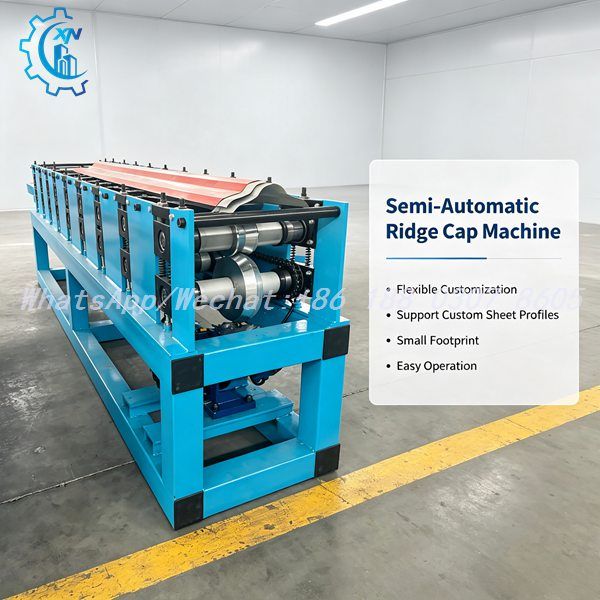
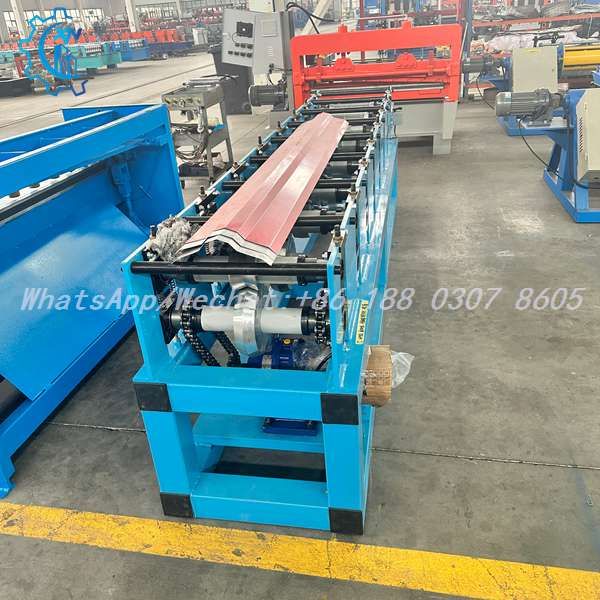
1. Ridge forming machine built for a first workshop - a short profile needs only 7 to 21 stands, so the machine is compact, light and needs no heavy foundation.
2. Semi-automatic working keeps the entry cost down: the operator feeds the coil, the rolls form the ridge, and the length is cut at the machine on a 2.2kW to 5.5kW supply.
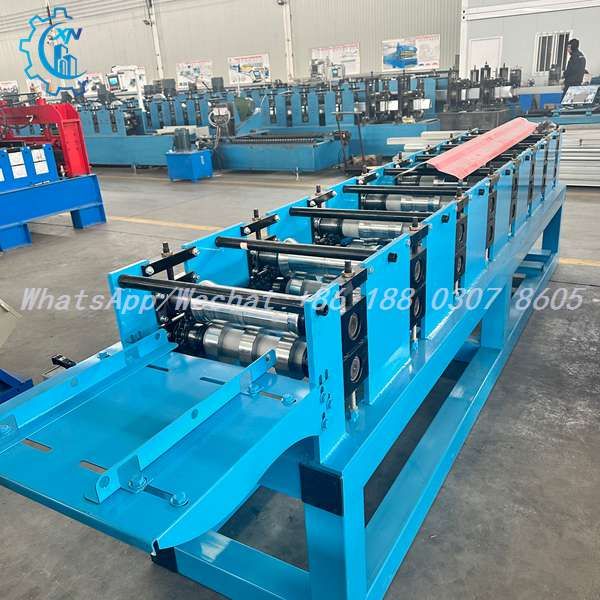
3. Roller positions set on a slotted base plate with clamping bars and lock nuts, so profile settings can be repeated when you change back to an earlier size.
4. Mob/WhatsApp/Wechat: +86 188 0307 8605
5. Email: sara@xinnuomachine.com
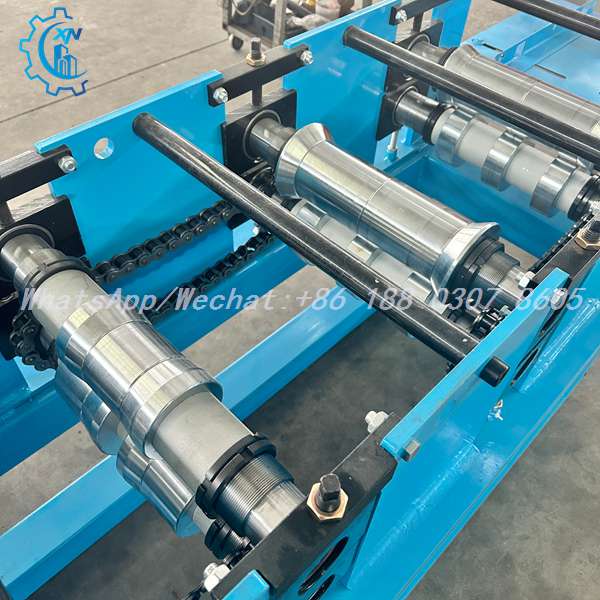
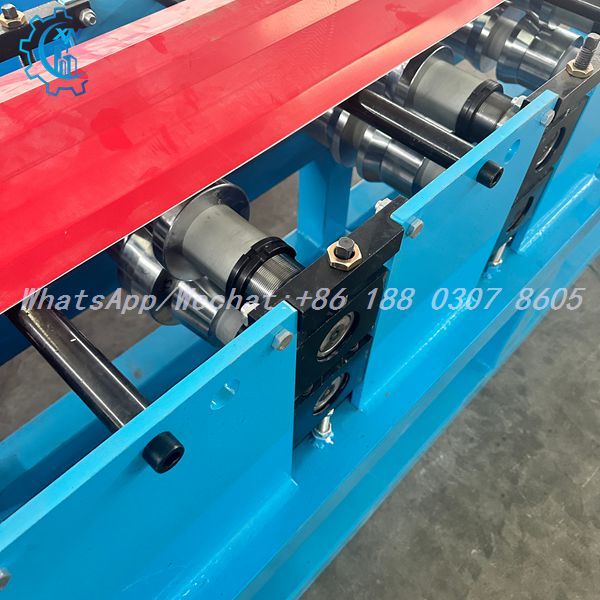
Inside the ridge forming machine the upper and lower shafts carry chrome stepped rollers built from coaxial segments of different diameters, wide mirror-polished bands divided by raised forming rings and deep ground grooves. Shaft ends sit in black machined support plates bolted to the blue side plates, two glossy black guide rods run diagonally above the rolls, and a roller chain with dark sprockets drives the near lower shaft.
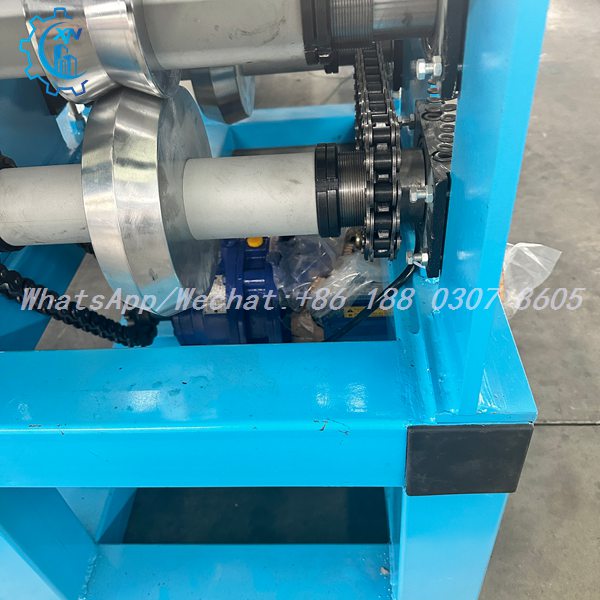
On the drive side of the ridge forming machine a black roller chain runs over its chain wheel and drops away diagonally, with a second strand and a polished sprocket disc cut with radial slots on the shaft hub. Above, the chrome roller shows a raised step, a threaded section and a black lock ring, and a matte grey hollow roller end protrudes below the blue welded frame.
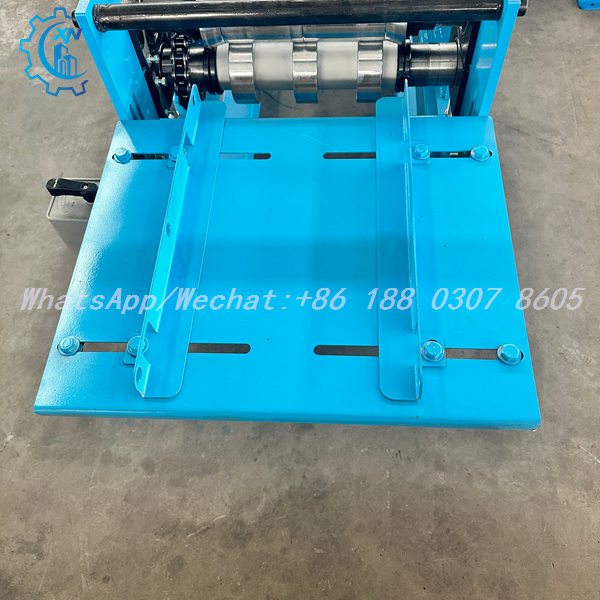
Two long oblong slots run lengthwise through the blue base plate of the ridge forming machine, with blue clamping bars bolted down over them and repositioned along the slots to set the working position. Above the plate, a transverse assembly carries polished chrome stepped roller segments between black machined end blocks and a dark bearing housing, and the surrounding frame is welded square tube with flat side plates and a row of bolt heads.
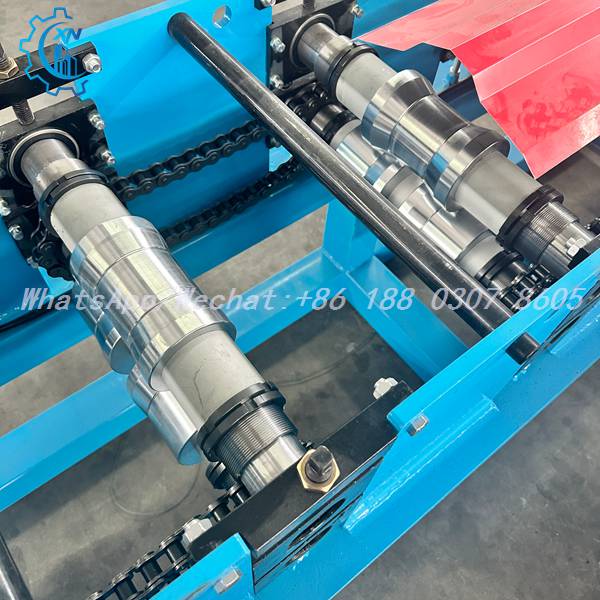
At the top right of the ridge forming machine a wide bright-red coated sheet with a folded edge is visible at the roll gap, running through the chrome stepped rollers on the two parallel shafts. Black machined plates clamp the shaft ends, a large black hex nut with washer sits over an adjusting stud, chain with dark sprockets runs along the lower shaft, and the blue welded frame stands on an open base below.
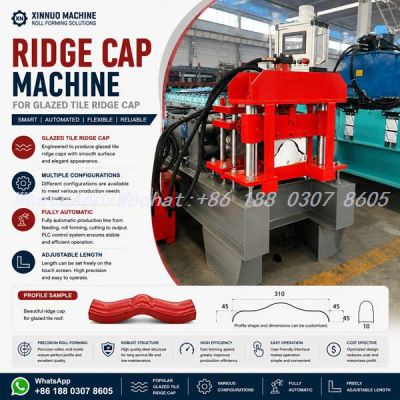
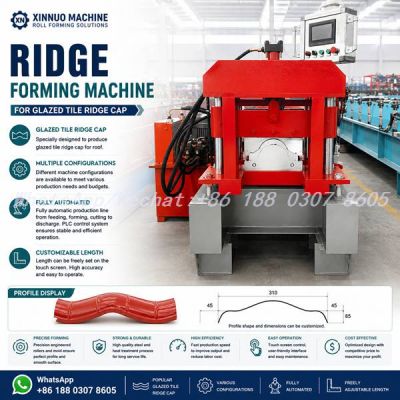
This ridge forming machine rolls narrow coated or galvanised strip into the cap that covers the joint where two roof slopes meet. It is built for the manufacturer who is starting out rather than expanding: the profile is short and symmetrical, so it needs only 7 to 21 forming stands, and that is why the machine stays small, light and inexpensive compared with a roof panel line that carries 15 to 26 stands on a heavier frame.
The working sequence is simple. Strip is fed into the rolls by hand, the upper and lower chrome rollers form the ridge shape step by step, and the finished length is cut at the machine. There is no automatic decoiler, no stacking section and no long run-out table to buy, install or power, which is what keeps both the investment and the floor area within reach of a first workshop.
Settings are made on a slotted base plate: roller positions are carried on clamped bars that can be slid along the slots and locked, with threaded adjusters and lock nuts at the shaft ends holding each setting. The drive is a roller chain over machine-cut sprockets with the shaft ends carried in black machined support plates, so the transmission is compact, visible and straightforward to service.
Ridge Forming Machine - Made in the XINNUO Workshop Since 1995
XINNUO has manufactured cold roll forming equipment since 1995 and has built ridge forming machines as part of the same product family as our roof and wall panel lines. That matters for a first-time buyer in two ways: the profile can be drawn to match the roof sheet you intend to sell beside it, and the machine is built in the same workshop as the machines it has to work with instead of being assembled from bought-in parts.
Because we also build panel lines, we know exactly what a ridge cap has to do on a roof - lap over at least one corrugation on each side of the ridge without gaps or lift. Profiles are matched to the sheet you produce, with covering widths from 175mm to 600mm, and switchable feed widths are available where several panel models are sold.
Machines ship to more than 150 countries. New buyers receive the profile drawing and layout drawing before shipment, operator training covering feed, roll setting and cut-off, a spare parts list, and long-term parts support.
Q1: Is a ridge forming machine a sensible first machine for a new business?
A: It is one of the better entry points into roll forming, because the product is short, the machine is small and the customer base is close to home. You are selling caps to the same people who buy roof sheets, so the sales channel can be built from suppliers and contractors you already know.
Q2: How much do I need to start ridge cap production?
A: Less than a roof panel line in every respect: a smaller machine, a lighter frame, a modest supply from 2.2kW, one operator and a small stock of narrow coil. Because the profile is narrow, you are also holding less capital in raw material per metre of finished product.
Q3: What should I sell alongside the caps?
A: Most buyers pair the ridge forming machine with the roof sheet they already deal in, so the customer gets sheets and caps in the same colour and finish. If you do not sell sheets yet, start with the cap and build the relationships with sheet suppliers and roofing contractors in your area.
Q4: How hard is it to set the machine up?
A: The settings are made on a slotted base plate: the roller position is carried on a clamping bar that slides along the slot and is bolted down, with threaded adjusters and lock nuts at the shaft ends. We provide training on feed, roll setting and cut-off, and the settings for each profile are recorded so they can be repeated.
Q5: What is the smallest production setup I can start with?
A: One machine, one operator and a level concrete floor with an anchor point. Because the frame is light and compact there is no foundation block to pour, which is what makes the machine usable in rented or temporary premises.
Q6: Can I add roof panel production later?
A: Yes, and that is the usual growth path - start with the ridge forming machine, add a panel line when the volume justifies it, and keep the same profile family so the caps and sheets continue to match. Buying the ridge machine first also lets you learn the coil trade and the local market at low cost.
Q7: What coil should I stock at the start?
A: The narrow widths the profile needs, in the colours your market sells most, in the same material as the roof sheet - pre-painted or galvanised. Wide coil is not needed for the ridge profile, so your stock investment stays small, and offcuts from panel production can often be run as ridge caps.
Q8: What support do you give a first-time buyer?
A: A profile drawing and layout drawing before shipment, the machine test run on your profile, an operator training session covering feed, roll setting and cut-off, an operation and maintenance manual, a spare parts list, and long-term parts support. Delivery is typically 20 to 35 days depending on configuration.
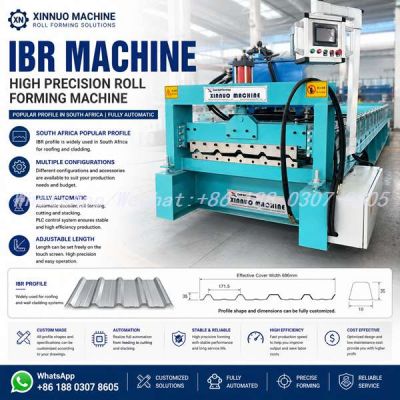
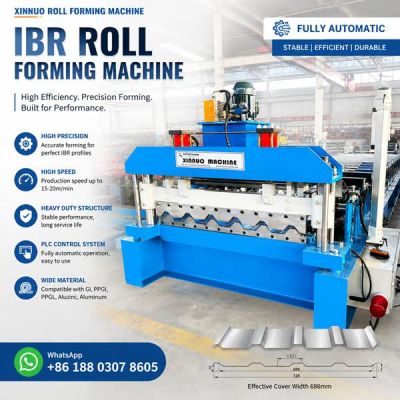
XINNUO ROLL FORMING MACHINE CO., LTD is a professional manufacturer specializing in high-quality ibr making machine and advanced ibr machine solutions. With years of industry experience, we provide reliable, efficient, and customized roll forming equipment to meet global roofing production needs, ensuring stable performance, precision forming, and long-term durability for our customers worldwide.
[ read more ]